What Is a Block Plan, and Why Does Compliance Matter?
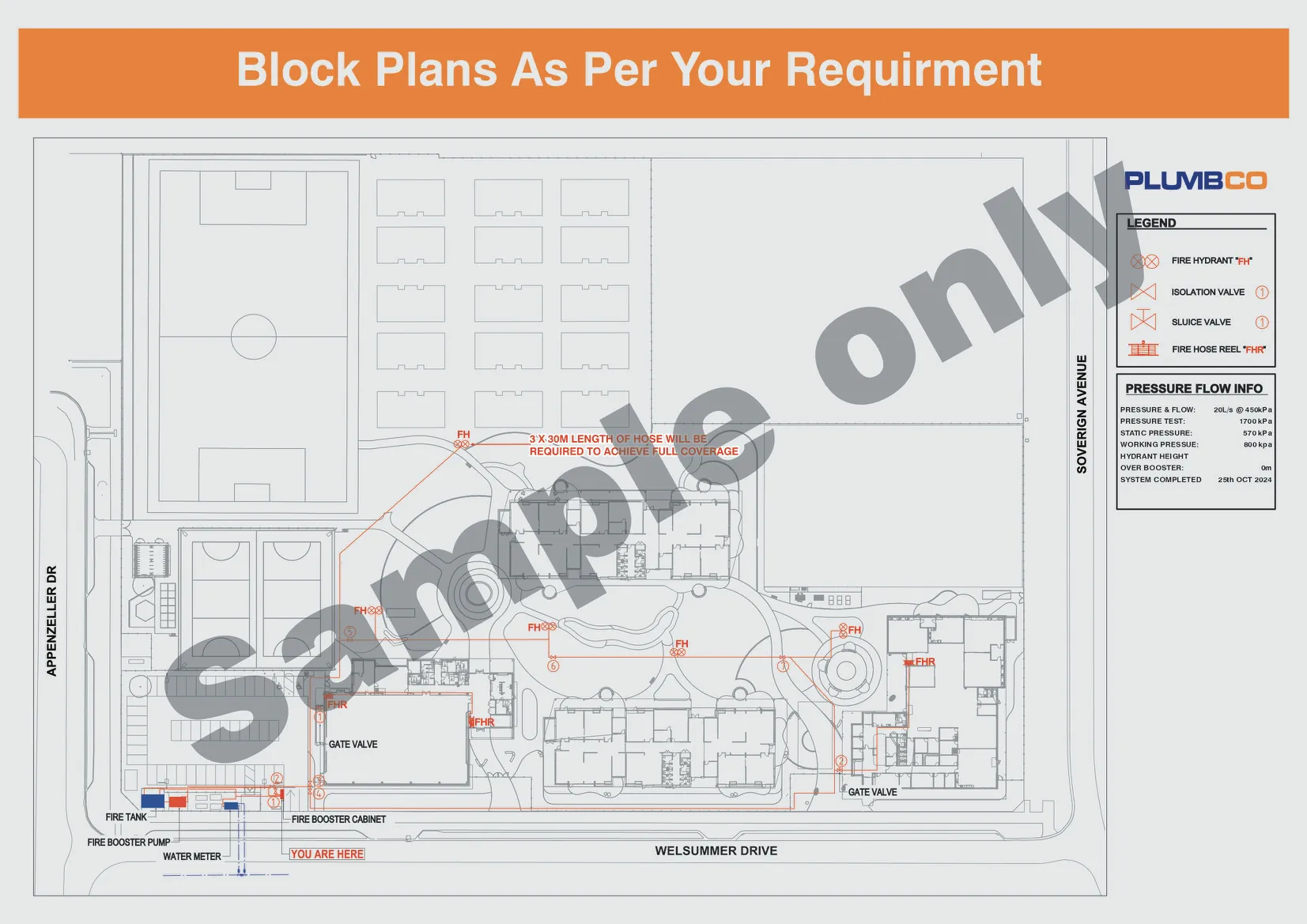
A block plan is a durable diagram, usually mounted near a fire booster assembly or control room, showing the layout of a building's fire hydrants, sprinklers, or alarm zones. Fire and Rescue crews rely on it during emergencies to locate equipment fast. If it's inaccurate, poorly made, or non-compliant, it can slow down emergency response — and fail a fire safety audit.
The Standard That Applies: AS 2419.1
Fire hydrant block plans in particular fall under AS 2419.1 – Fire hydrant installations, which sets requirements for signage clarity, placement, and durability so information is legible and reliable under emergency conditions. Depending on the system, related standards like AS 2441 (hose reels) and AS 2444 (extinguishers) may also apply to associated signage.
5 Signs Your Block Plan Is Australian Standard Compliant
1. It matches your approved fire system drawings
The block plan should be a direct, accurate reflection of the PDF drawings approved by your building surveyor or fire engineer — not a rough sketch or an outdated version.
2. It's made from a durable, weather-resistant material
Standards call for signage that won't fade, crack, or become illegible over time. Aluminium acid-etched, paint-filled plans are built to withstand plant rooms, outdoor booster cabinets, and harsh environments for years.
3. Text and symbols are clear and high-contrast
Firefighters need to read the plan instantly, even in poor lighting. Faded ink, low-contrast colours, or cluttered layouts are red flags.
4. It's correctly sized and positioned
Standard sizes (A4 to A1) and correct mounting near the fire indicator panel, booster assembly, or control room are part of compliance — not just having a plan somewhere in the building.
5. It's been updated after any building changes
A block plan showing hydrants or sprinklers that no longer exist — or missing new ones — is no longer compliant, regardless of how it was originally made.
What Happens If Your Block Plan Isn't Compliant?
Non-compliant or missing block plans are a common finding in fire safety audits and annual essential safety measure inspections. This can delay certification, create liability for building owners, and — more importantly — slow down emergency crews when seconds matter.
How Block Plan Gets It Right
At Block Plan, we manufacture aluminium acid-etched, paint-filled block plans directly from your approved PDF drawings — the same drawings your surveyor or fire engineer has signed off on. That means no guesswork, no redrafting, and no compliance gaps introduced during manufacturing.
Our block plans are built for durability, clarity, and long-term legibility, and we've been supplying fire protection contractors, builders, and facility managers across Australia since 1989.
Not sure if your current block plan is up to standard? Get in touch with our team for a fast, accurate replacement made to your exact specifications.